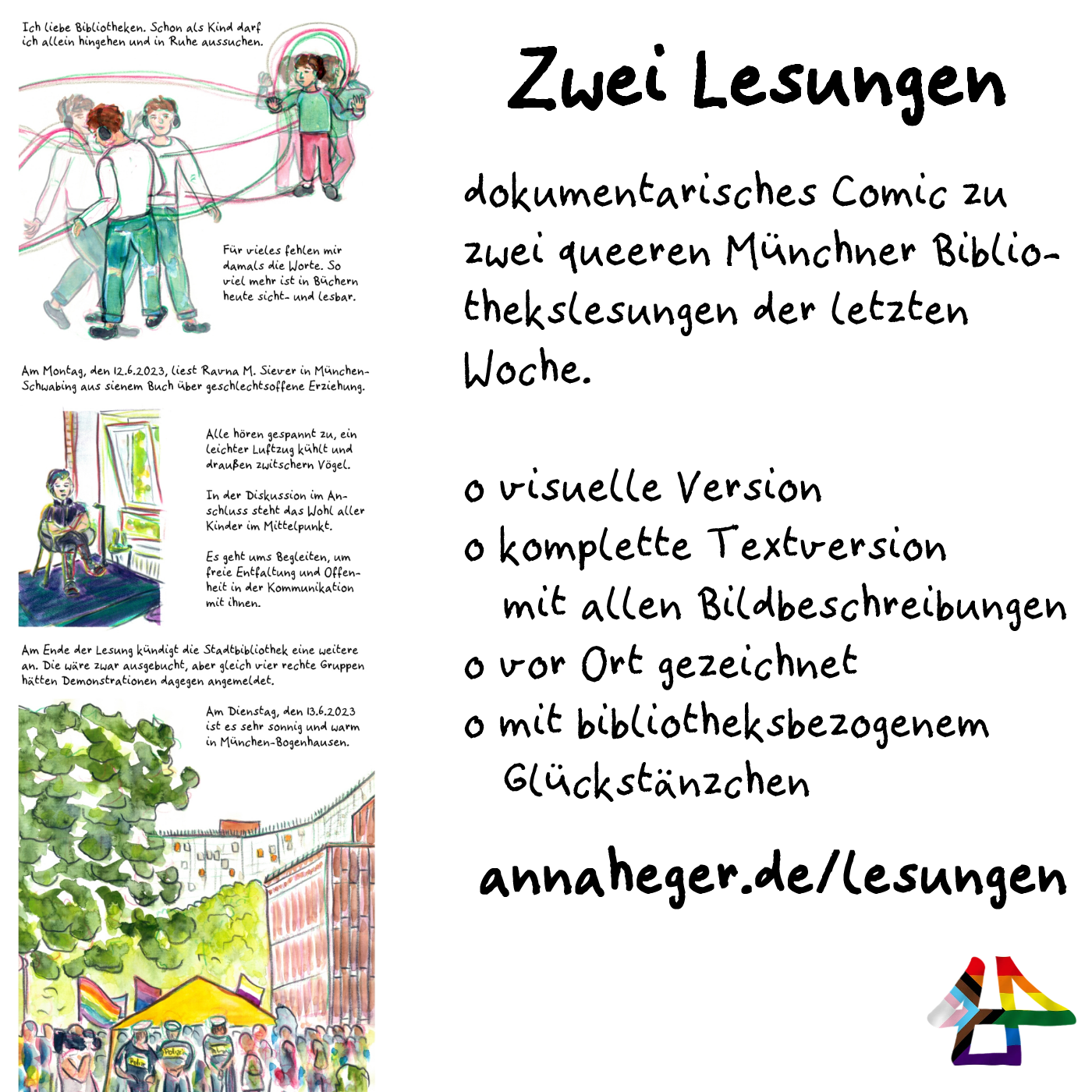
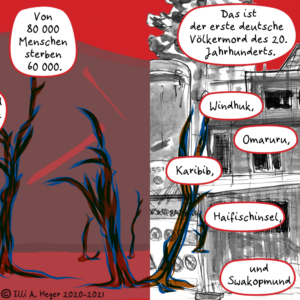
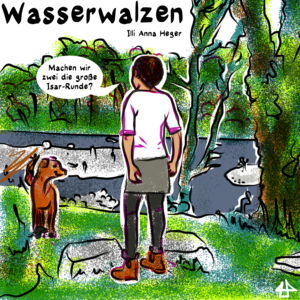
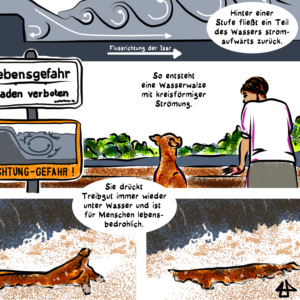
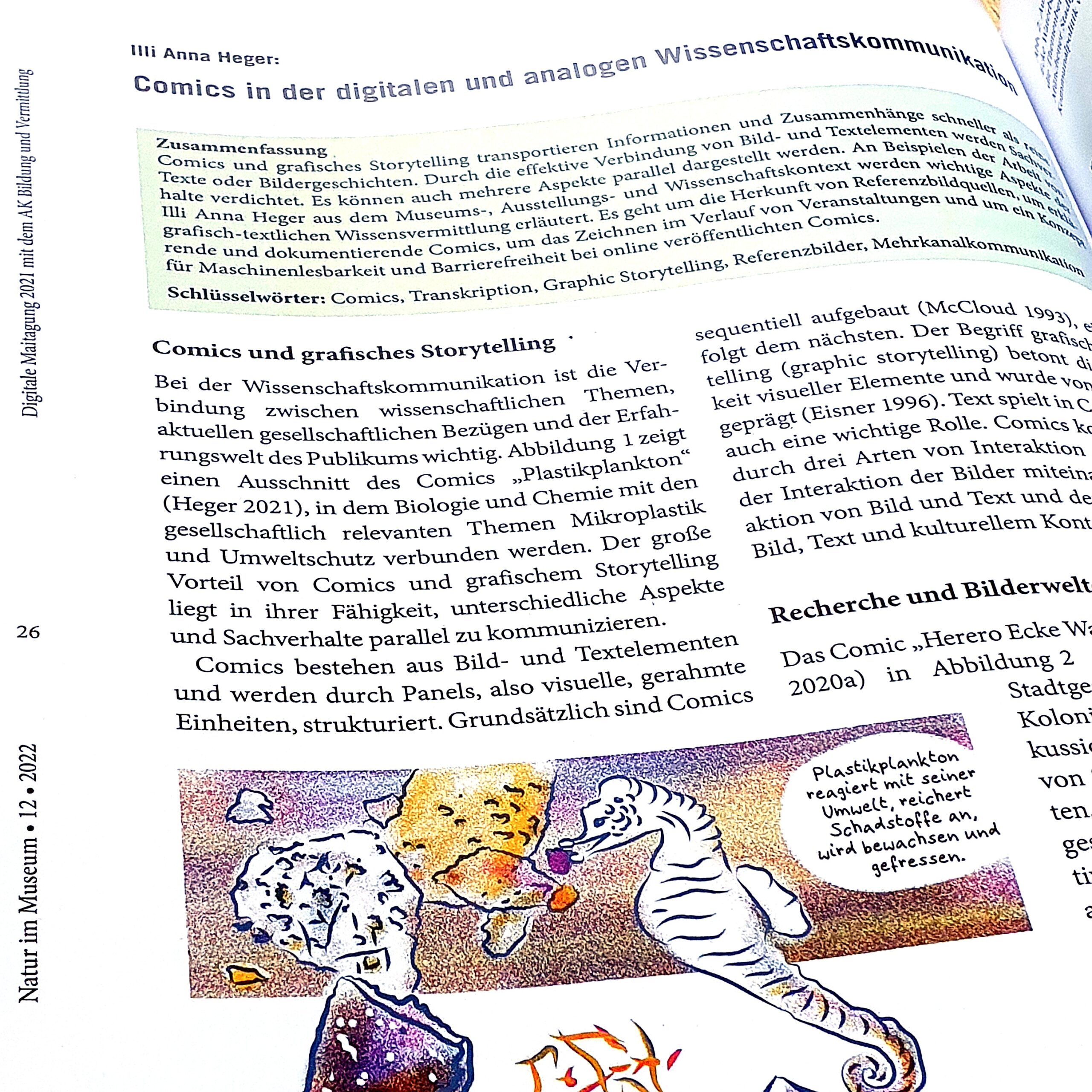
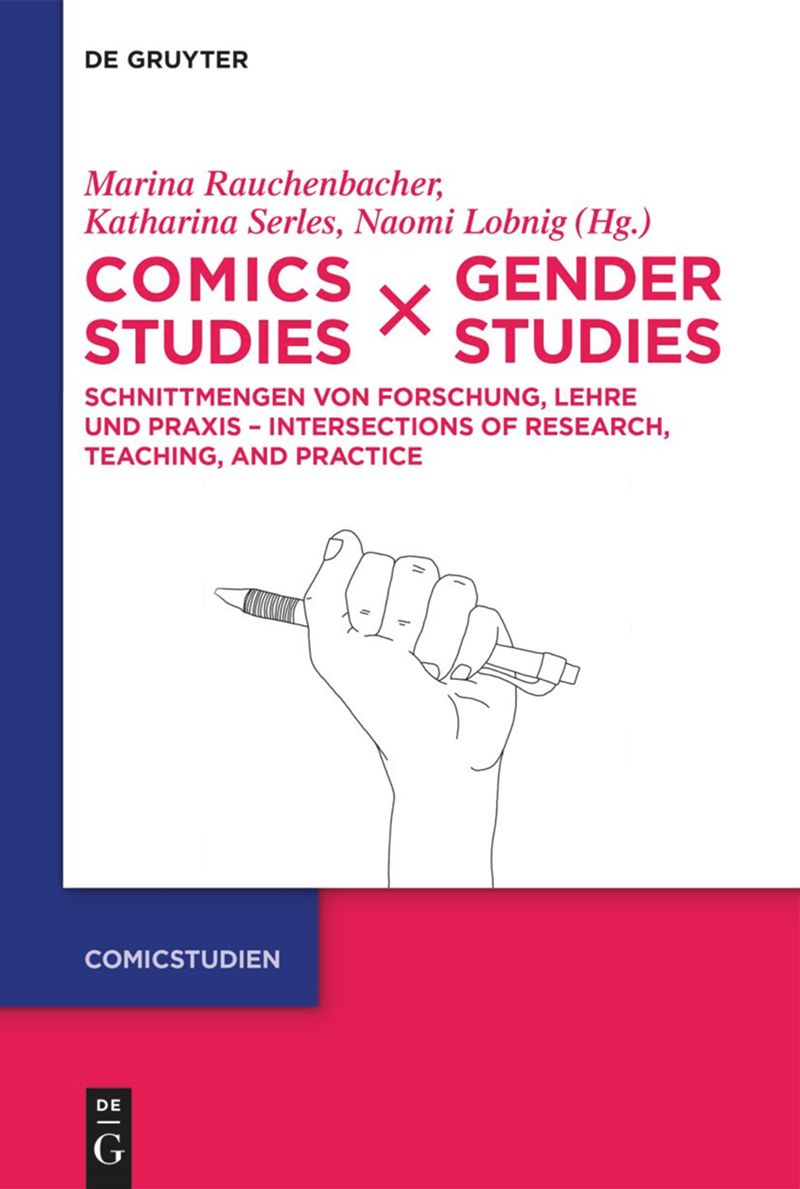
Eine Arbeitsanleitung um alt Texte zu erstellen, grade solche die Comics beschreiben, ist online. Natürlich als zweiseitiges Comic, dass ein weiteres Comic zitiert. Diese Arbeitsanleitung ist Teil von „Comics Studies x Gender Studies – Schnittmengen von Forschung, Lehre und Praxis“ mit weiteren Comicarbeitsanleitungen und vielen Artikeln. Das lag gestern endlich als Hardcover beim mir im Briefkasten, das E-book lässt sich kostenlos auf der Webseite von De Gruyter herunterladen.

![Screenshot from the paper with a mathematical formular called (28):
Summing up the foregoing discussion, German xier — and, incidentally, also Italian ze, which is not the primary focus here—does not simply omit binary gender values but encodes a positively specified, interpretable [GENDER] feature whose value explicitly excludes [MASCULINE] and [FEMININE]. This exclusion is not an output of underspecification or morphosyntactic default, but a grammatically encoded presupposition that the referent is non‑binary or otherwise non‑classifiable under binary gender categories. The semantic contribution of xier can be approximated as in (28):
(28) [[xier]] = λx: ¬binary(x). x
‘The individual x such that x is not classifiable under binary gender distinctions.’
This presuppositional profile sets xier apart both from semantically ambiguous forms and from ϕ‑complete but referentially minimal pronouns. For example, German es is ϕ‑complete but typically associated with non‑individuated or inanimate referents, while English singular they, although compatible with nonbinary reference, does not necessarily presuppose it. In contrast, xier encodes a referential constraint that is both semantically specific and pragmatically regulated: its use is felicitous only in discourse contexts where the referent’s nonbinary identity is accessible or inferable.](https://www.annaheger.de/wp-content/uploads/2025/10/screenshot_20251008_011552_bluesky5464561680334886447.png)